
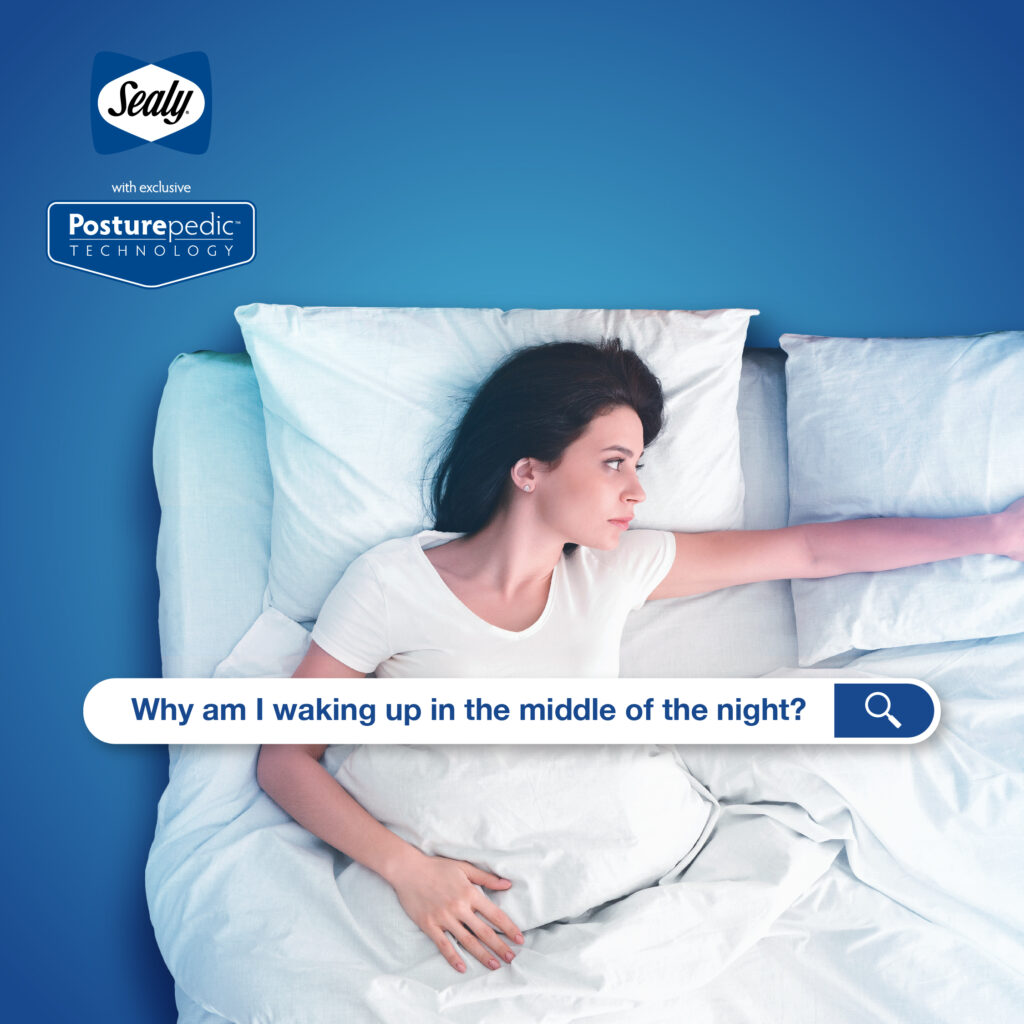
Many of us have experienced the unpleasant “middle-of-the-night waking”. Even though you
may be able to fall asleep quickly, you’ll wake up in the middle of the night with difficulty
falling back asleep. These episodes can leave you groggy in the morning.
What exactly causes this phenomenon? And how can we prevent it?
How much sleep do you need?
You may have heard that the average adult needs between seven and nine hours of sleep per
night. This is true, but only to a certain extent. While research shows that most adults need
somewhere in this range, some people require more or less sleep than others to feel their
best. Several factors influence the amount of sleep you need:
• Your age—As we get older, we tend to need less sleep than when we were younger.
• Your lifestyle and diet—If you lead an inactive lifestyle or eat an unhealthy diet with
lots of sugar and processed foods, you’re more likely to have trouble falling asleep at
night.
• Stress—Stress can keep us up at night because it makes our bodies produce adrenaline
instead of melatonin (the chemical responsible for making us sleepy).
What are the signs of poor-quality sleep?
Below are some of the common signs of poor-quality sleep:
• Trouble falling asleep
• Waking up frequently during the night
• Waking up too early or not feeling well-rested in the morning
• Feeling tired and sleepy during the day, even after a full night’s sleep. This can result in
difficulty concentrating, memory problems, or stress management issues.
What causes interrupted sleep?
• Stress. Stress can have a major impact on your sleep. It’s common for people to
experience disrupted sleep when they are stressed out.
• Work. If you’re working long hours or over-extended at work, it can take effort to get
the rest you need at night. This is especially true if your job involves night shifts or
early morning commutes that make falling asleep later in the day difficult.
• Mattress. Many people underestimate how much a mattress impacts your sleep. Look
out for the following signs that your mattress could be the culprit:
• Your mattress is more than eight years old
• Your mattress squeaks and there are lumps and pumps on the mattress
• You have a “taco bed” – when you seem to roll into the middle of the bed
• You get a better sleep when you crash on the couch or in your child’s bed
• You wake up with aches and pains
If you think your mattress might be causing you to wake up tired, use our handy
Mattress Selector tool to find the best Sealy for you. Simply answer a few questions
about your sleep style, and we will make a recommendation. Click here to get started.
How can you improve your sleep?
• Make sure your bedroom is dark and quiet. If you live in a noisy area, consider
investing in a white noise machine or sound masking device to help block outside
noise.
• Don’t drink caffeine or alcohol within six hours of bedtime (this includes chocolate).
They can interfere with sleep by keeping you awake longer than necessary!
• Avoid napping during the day—it can make it harder to fall asleep at night when it’s
time for bed!
• Avoid eating heavy meals right before bedtime. Try not to eat for at least two hours
before going to sleep so that your body has time to digest food properly without
upsetting its natural rhythm of restfulness.
• Don’t exercise right before going to sleep—it will increase body temperature and heart
rate, which might keep you from getting enough restful REM cycles needed for true
relaxation and rejuvenation during this critical part of our biological cycle known as
circadian rhythm (which controls many other essential functions such as blood
pressure).
• Create a calming bedtime routine. This could involve gentle stretching, a long bath,
or reading. Avoid looking at screens at least an hour before bedtime.
Good sleep is essential for good health
Sleep is as important to your health as food and water. It’s when the body repairs itself,
replenishes nutrients, builds muscle mass, and strengthens the immune system to fight
disease. The brain processes information and consolidates memories while you sleep. When
we don’t get enough of it, our bodies cannot function at their best.