
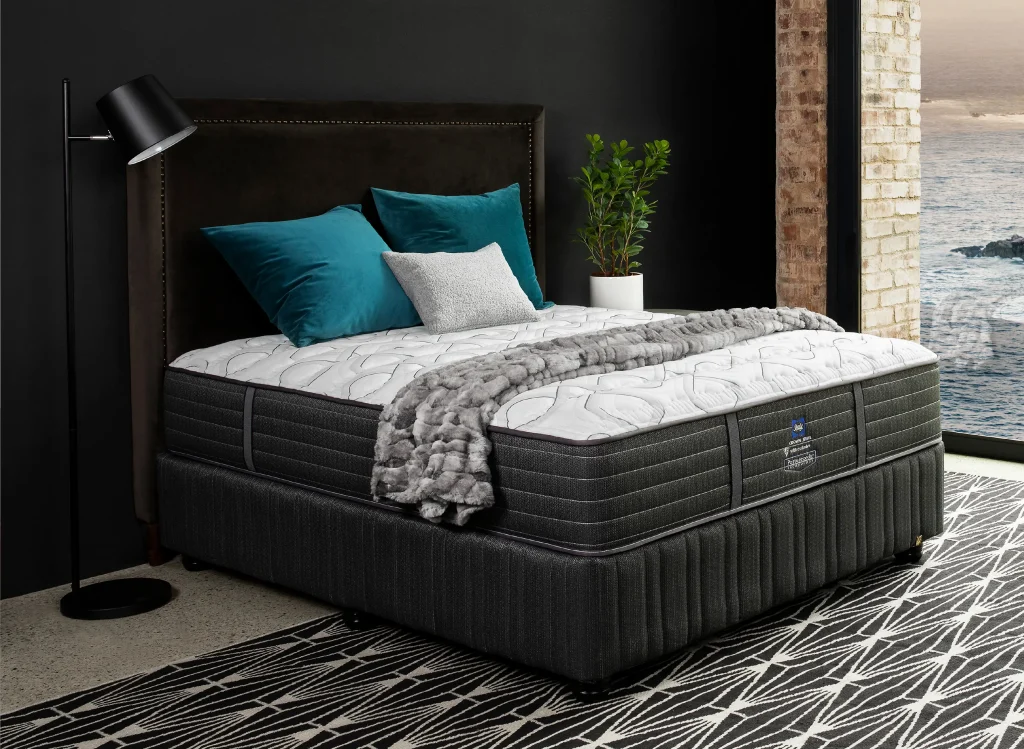
Designing for the Senses — and the Sensors That Support Them
For years, comfort has been something we’ve tried to define by feel alone.
Softness. Firmness. Preference.
But as design evolves, so too does our understanding of what comfort really means. Today, the conversation is shifting — from something purely physical, to something far more responsive. More intuitive.
A deeper kind of comfort doesn’t just rely on how something feels.
It depends on how it responds.
When Design Becomes Sensory
The modern home is no longer designed for the eye alone.
Spaces are becoming more immersive — designed to engage the senses in subtle but meaningful ways. Texture, temperature, airflow, stillness — each element contributes to how we experience a space, not just how we see it.
In the bedroom, this becomes even more important.
Because rest is not visual.
It’s sensory.
It’s felt in the way your body settles, the way pressure is relieved, and the way the environment supports you throughout the night.
The Role of Sensors in Comfort
What many don’t realise is that behind this sensory experience lies something far more intelligent.
Modern sleep systems are designed to sense the body — to respond to weight, movement, and pressure in real time. Instead of remaining static, they adapt. Adjust. Support.
At the core of this approach are responsive spring systems that detect how the body is positioned and provide deeper support where it’s needed most.
This creates a unique interaction:
- the body presses down
- the system responds upward
- balance is restored
It’s not simply about softness or firmness anymore — it’s about interaction.
A System That Listens to the Body
Beneath the surface, layers work together like a quiet network.
A responsive coil system forms the foundation, sensing weight and adjusting to movement as the body shifts throughout the night.
Above this, gel-infused memory foam contours to pressure points — easing tension in areas like the shoulders and hips, while also helping regulate temperature.
Zoned support provides additional reinforcement where it’s needed most, particularly in the centre third of the mattress, supporting the lower back and encouraging proper alignment.
Even the outer layers play a role — from breathable fabrics that wick away moisture to materials designed to maintain a comfortable sleeping climate throughout the night.
Each element is designed not just to exist, but to respond.
Where Senses and Sensors Meet
This is where comfort becomes something more refined.
The senses experience:
- softness
- coolness
- ease
- stillness
But behind that experience, sensors — in the form of engineered systems — are working continuously.
They:
- adjust support
- manage pressure
- regulate temperature
- maintain balance
The result is a sleep experience that feels effortless, even though it is anything but simple.
Comfort That Adapts Over Time
One of the most powerful aspects of responsive design is consistency.
A system that senses and responds doesn’t simply perform once — it continues to adapt night after night. It maintains its structure, its support, and its ability to respond to the body over time.
This is where durability becomes more than just longevity.
It becomes reliability.
A quiet assurance that comfort won’t fade — it will continue to support.
A Deeper Kind of Comfort
As design continues to evolve, comfort is no longer defined by a single moment of feeling.
It’s defined by how experiences are sustained.
How support is maintained.
How environments respond.
How the body is cared for — without needing to think about it.
Because true comfort isn’t passive.
It’s responsive.
And in the hours you don’t see, that’s what makes all the difference.